
Review · COPENHAGEN
Walk & Canal Tour: Copenhagen Highlights + Changing of the Guards
Copenhagen packs a lot into a small center, and this tour makes a smart three-hour sweep through it. You’ll walk from Central Station to the harbor, ride the electric harbor ferry when service allows, visit the Little Mermaid, and finish at Amalienborg for the guards. The route gives you both postcard Copenhagen and everyday city life.
I like the way the tour uses public transport instead of treating the canal as a glass-sided sightseeing bubble. I also like the small maximum group of 15, which makes it easier to hear guides such as Michael, Maybritt, Mia, or Otto and ask questions. The main caution is that this is a proper walk, about 5 kilometers when the ferry operates and roughly 6 to 7 kilometers if the ferry is full or canceled.
Key points at a glance
- Start beneath the clock at Central Station: Meet inside the main hall, beside the correct 7-Eleven.
- See central Copenhagen on foot: Tivoli, Christiansborg, the Black Diamond, Kastellet, and royal Copenhagen all fit into one route.
- Ride a local electric ferry: The harbor bus provides views of the Opera House, Amalienborg, Nyhavn, and the waterfront.
- Finish with royal ceremony: Morning departures at 9:00 or 9:30 arrive in time for the full noon Changing of the Guards.
- Expect a 5 to 7 kilometer walk: Comfortable shoes and weather protection matter.
- Pay $77.39 per person for a broad introduction: The price makes the most sense if you want orientation, history, ferry transport, and a timed royal finale in one outing.
Why this tour works as a first look at Copenhagen
This is not a slow museum tour or a ride where you stay seated most of the time. It is an orientation walk with a short public ferry ride added in, and that combination is useful on a first day.
You move from the city’s central transport hub toward royal Copenhagen, passing major buildings along the way. The route introduces Denmark through monarchy, democracy, design, mythology, literature, wartime memory, and daily city life. That mix gives you more context than a simple checklist of monuments.
The tour also helps you understand Copenhagen’s layout. By the end, you know where Central Station, Christiansborg, the waterfront, Nyhavn, the Little Mermaid, Amalienborg, and the metro near Kongens Nytorv fit together. That practical sense of place can save time during the rest of your stay.
The guide makes a big difference. The strongest feedback centers on friendly, clear storytelling and guides who answer questions without turning the walk into a comedy routine. Maybritt is praised for making the tour personal and keeping a manageable pace, while Michael is noted for useful local tips and an easy manner. Mia, Otto, Andy, Andreas, Eric, Signe, Line, and Amalie have also led tours, so your exact experience will depend on the assigned guide.
More ways across the water in the world:
- New York City: Statue of Liberty & Ellis Island with Ferry
★ 4.6 · 18,683 reviews - All Inclusive Blue Mountain,Scenic World,Lunch,Koalas,ferry
★ 5.0 · 7,832 reviews - Muir Woods and Sausalito (Return by Bus or Ferry)
★ 4.5 · 5,098 reviews
Meeting at Central Station and walking toward Tivoli
The meeting point is inside Copenhagen Central Station, in the main hall beneath the large round analog clock next to a 7-Eleven. There are two 7-Eleven shops in the station, so use the clock as your main landmark.
This is a practical meeting point. Central Station is easy to reach by train and public transport, and it puts you right in the middle of the city. The guide begins with the station’s role as Copenhagen’s main transport hub, linking the city to the rest of Denmark and beyond.
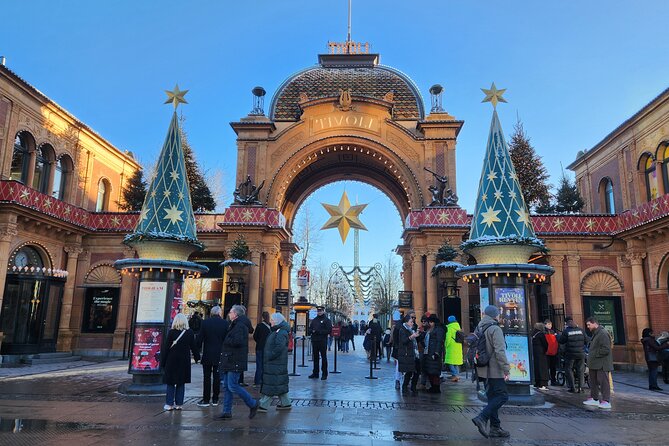
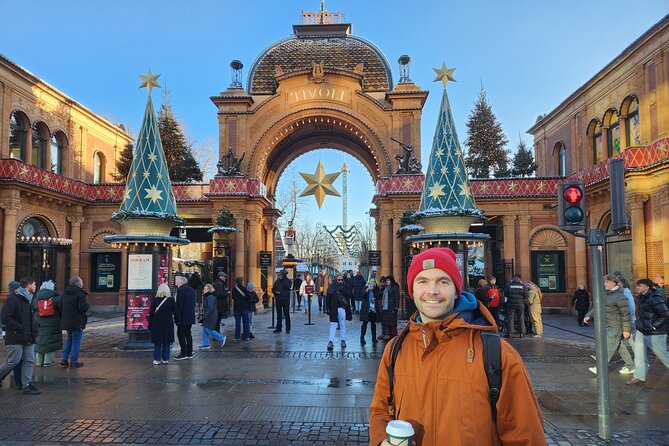
The first outside stop is Tivoli Gardens. You only stop outside, and the admission fee is not included. That matters if you had hoped to ride attractions or explore the gardens. The value here is the short historical introduction and the view of the entrance and ornate buildings.
Founded in 1843, Tivoli is one of the world’s oldest amusement parks. The guide explains its place in Danish culture and the well-known connection to Walt Disney, who visited Tivoli before creating Disneyland. You also get a useful introduction to hygge, the Danish fondness for warmth, comfort, design, and shared enjoyment.
Glyptotek and Christiansborg: art beside political power
The next stop is the Ny Carlsberg Glyptotek, where you pause outside the grand museum. The building is worth seeing even if you do not enter. Its elegant façade and large glass dome hint at the tropical winter garden inside.
The museum itself is not included, so treat this as an architectural stop rather than a museum visit. If you later return on your own, you can make a separate decision about admission and time. On the tour, the guide uses the building to explain the city’s links between art, industry, philanthropy, and design.
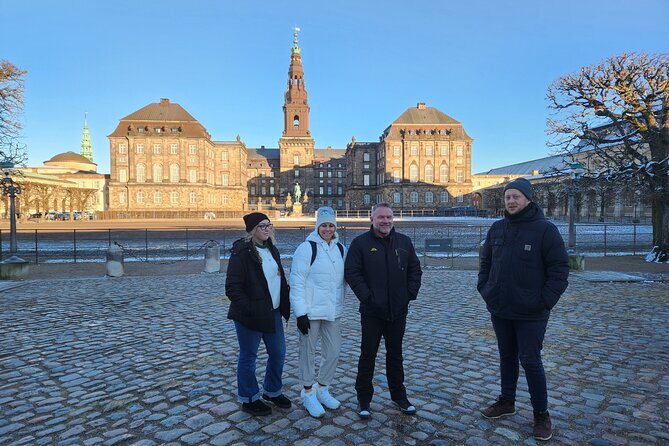
Christiansborg Palace receives more time, about 10 minutes. This is one of the best stops for understanding how Denmark changed from royal rule toward modern parliamentary government. The site has held the city’s main castle for more than 800 years, and the present complex contains the Danish Parliament, Supreme Court, and Royal Reception Rooms.
The palace has burned three times, and each rebuilding reflects a different period. That makes Christiansborg more than a pretty façade. It is a place where royal ceremony, political power, and modern democracy share the same address.
You do not enter the palace on this tour, and admission is not included. The guide’s explanation is the point. If you want the rooms, kitchens, ruins, or tower afterward, you will need a separate visit.
The Black Diamond and Copenhagen from the water
The Black Diamond, home of the Royal Danish Library, marks the transition from historic Copenhagen to the modern waterfront. Its dark granite exterior reflects the harbor, and the building functions as both a library and a public cultural space.
This is a quick stop, but it gives you a fine example of Copenhagen’s modern architecture. Students, concertgoers, readers, and café visitors use the building, so you see how a major cultural institution fits into ordinary city life.
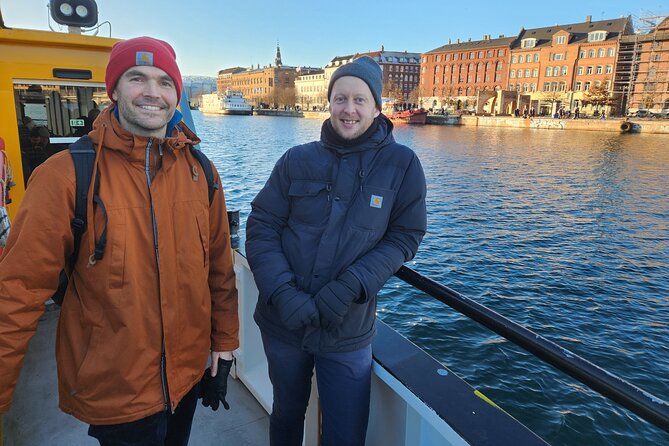
From here, the group heads to the electric harbor ferry. This is one of the tour’s most appealing features because you ride part of the city’s regular public harbor network rather than taking a private sightseeing boat. The trip lasts about 25 minutes and offers a fresh view of the city’s waterfront buildings.
You may see the Royal Danish Opera House, Amalienborg Palace, colorful houseboats, Nyhavn, and the Old Stock Exchange from the water. The Opera House is especially impressive from this angle, with its broad roof and clean modern lines facing the harbor.
There is one important limitation. Seats cannot be reserved, and the ferry can be full or canceled, especially on weekends or when conditions affect service. On some weekdays, the group may have the ferry nearly to itself. If the ferry cannot be used, the guide follows a scenic walking route instead.
That backup plan still covers attractive waterfront areas, but the walking distance rises to about 6 or 7 kilometers. If the ferry is a major reason you are booking, understand that it is included as an intended part of the experience, not a guaranteed private boat ride.
Same harbour, another way to spend the day:
- Blue Mountains Small-Group Tour from Sydney with Scenic World,Sydney Zoo & Ferry
★ 5.0 · 3,709 reviews - Fort Sumter Admission and Self-Guided Tour with Roundtrip Ferry
★ 4.5 · 3,343 reviews - Waiheke Island: Ferry & Hop-On Hop-Off Explorer Bus Tickets
★ 4.6 · 3,311 reviews - Corralejo: Return Ferry Ticket to Lobos Island Fuerteventura
★ 4.7 · 3,098 reviews
The Old Stock Exchange, Nyhavn, and the Little Mermaid
During the ferry ride, you pass the Old Stock Exchange, or Børsen. Its famous dragon-tail spire once made it one of Copenhagen’s most recognizable buildings. A serious fire in April 2024 badly damaged the structure, and restoration work is underway.
Seeing the building from the harbor gives the guide a chance to discuss Copenhagen’s respect for its older architecture and the work required to preserve it. Conditions may change as restoration continues, so do not expect the building to look as it did before the fire.
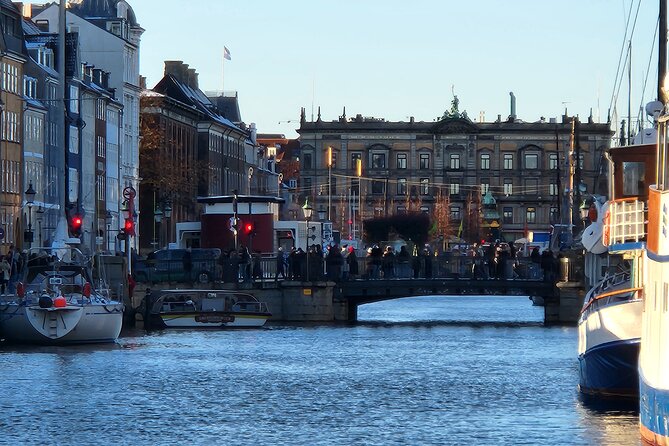
Nyhavn is another brief pass-by stop. From the water, the colorful façades and old wooden ships line up in a classic Copenhagen view. The canal was once a working port filled with sailors and merchants. Today, its cafés make it one of the city’s most popular places for a drink or meal.
The tour does not give you a long free period at Nyhavn. That is useful to know because the waterfront deserves more time if you want photographs, lunch, or a relaxed look at the houses. You can easily return after the tour, since the endpoint is only about a 10-minute walk from Kongens Nytorv and Nyhavn.
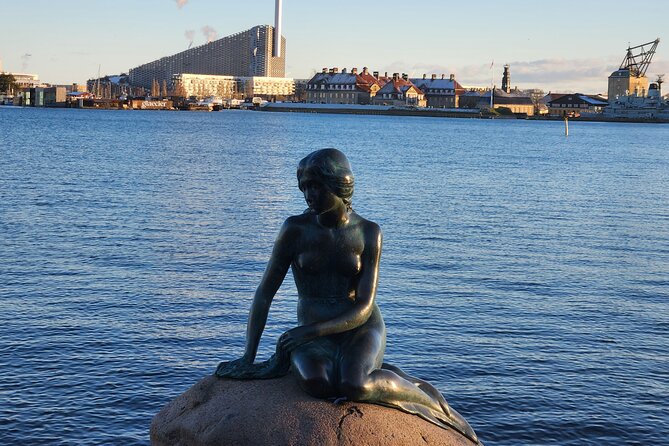
After the ferry, the route reaches the Little Mermaid. The statue is smaller than many first-time visitors expect, and the stop lasts about 10 minutes. The guide explains Hans Christian Andersen’s story and how this modest bronze figure became a national symbol.
The statue’s setting beside the water is part of its appeal. It is not a grand monument surrounded by a huge plaza. Instead, the Little Mermaid quietly faces the harbor, which suits the melancholy tone of Andersen’s tale.
If the ferry is canceled and the altered route cannot fit in the Little Mermaid, the guide may offer a separate visit after the scheduled tour if time allows. Do not count on that option if you have a tight afternoon plan. This is the clearest risk in the itinerary, and it has disappointed people who booked specifically to see the statue.
Gefion Fountain and the green fortress of Kastellet
The Gefion Fountain sits between the waterfront and Kastellet. Its bronze figures show the Norse goddess Gefion plowing Zealand from Sweden with four oxen. The story gives the stop a welcome change of pace after the city’s royal and political buildings.
The fountain is also well placed for photographs, with water, open space, and the fortress nearby. The stop is brief, about five minutes, but the mythology adds a distinctly Scandinavian layer to the walk.
Kastellet is one of Copenhagen’s best-preserved star fortresses. Its grassy ramparts, cobbled paths, red-brick buildings, moat, and old windmill create a calm setting that feels far removed from the traffic of the center.
The fortress remains an active military site, but it is also a public green space. You may see swans on the moat and people walking or exercising along the paths. The guide connects the defensive structure with ordinary modern life, which is one reason this part of the route feels more local than a standard monument circuit.
The nearby Kastellet windmill is a particularly nice detail. It is not merely decorative. It recalls the practical work once carried out inside the fortress. The walk through Kastellet can also be easier on the eyes and mind than a long stretch of city streets, though the grass, cobbles, and ramps still require steady footing.
Churchill Park, the Marble Church, and royal Amalienborg
Churchill Park borders Kastellet and honors Danish resistance fighters from the Second World War. A statue of Winston Churchill looks toward the harbor, and memorials throughout the park make this a quiet place to pause.
The stop adds modern Danish history to a route otherwise focused on monarchy, architecture, and older stories. It is short, but the subject deserves a respectful tone rather than a rushed photo stop.
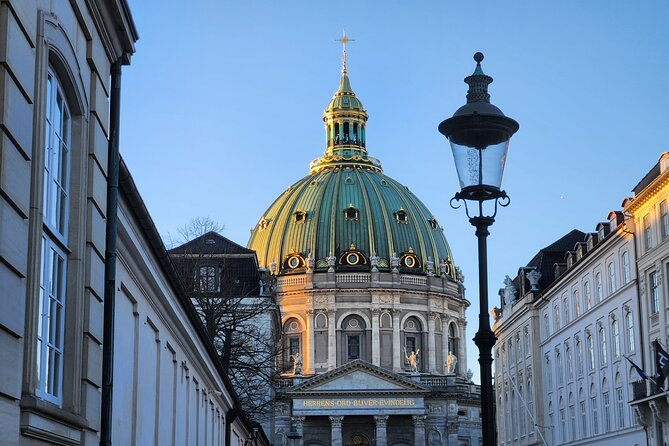
From there, you head toward Frederik’s Church, usually called the Marble Church. Its dome is one of Copenhagen’s most recognizable features and was inspired by St. Peter’s Basilica in Rome. The church took more than 150 years to complete, after an ambitious project ran into financial trouble.
You view the church from outside on this tour. From the square, the dome lines up beautifully with Amalienborg Palace, creating one of the city’s strongest architectural views. If you want to enter the church, you will need to do that separately.
Amalienborg is the final setting. Four matching Rococo palaces form an octagonal square around a statue of King Frederik V. It has been the Danish royal family’s official residence since 1794, and the arrangement makes the square feel both formal and surprisingly open.
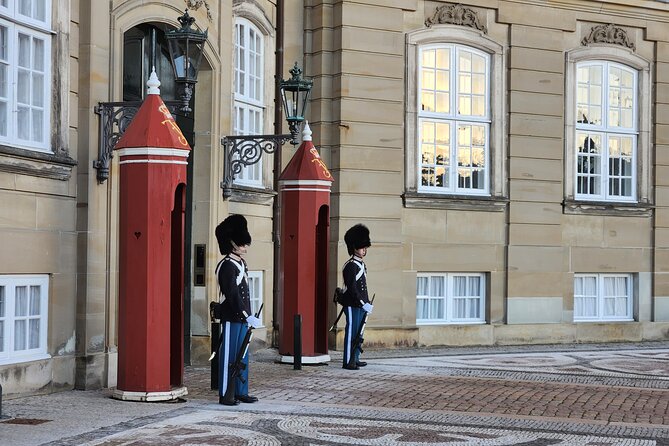
The guide explains the daily life of the royal household and the meaning of the guards’ movements. This helps you see the ceremony as more than a photo opportunity. It is a living part of the monarchy’s public routine.
The Changing of the Guards and choosing your departure
Timing matters more here than on most walking tours. The 9:00 AM and 9:30 AM departures are designed to arrive for the full Changing of the Guards at noon. Soldiers march into the square, sometimes accompanied by the Royal Danish Band, and you get a good position for the ceremony.
The 11:00 AM and 1:00 PM departures finish at Amalienborg too, but you see a smaller guard change as one shift replaces another. That version is quieter and less formal, yet it may suit you if you prefer a later start or do not need the full ceremony.
For the fullest royal experience, choose 9:00 or 9:30. For a shorter-feeling morning or afternoon orientation, the later departures still give you the same endpoint and much of the same route, but do not promise the noon spectacle.
The tour ends at Amalienborg, close to the metro and roughly a 10-minute walk from Kongens Nytorv and Nyhavn. That makes it easy to continue sightseeing, find lunch, or return to the central area.
Price, pace, and practical value
At $77.39 per person, this is not the cheapest way to walk around Copenhagen. The price makes more sense when you use the full package: a small English-speaking group, a three-hour guided route, the public harbor ferry when available, historical explanation, and the Changing of the Guards.
You are paying for an efficient first-day overview rather than admission to major interiors. Tivoli, the Glyptotek, Christiansborg, Amalienborg, and the Marble Church are viewed from outside, so budget extra if you want to go inside any of them.
The walk requires moderate fitness. One person described being slower in heavy snow and rain, while the guide offered help and kept the pace manageable. That suggests a considerate approach, but the route still covers a lot of ground. Wear walking shoes, check the forecast, and bring rain protection.
The tour is offered in English and includes a mobile ticket. Group discounts are available. Free cancellation is allowed up to 24 hours before the start time, but changes or cancellations inside that window are not refunded.
Who should book this Copenhagen walk
I would choose this tour if you have only a few days in Copenhagen, want a clear introduction on your first day, or prefer a guide to connect the sights into a story. It suits people who want major landmarks without spending the whole day inside museums.
It is also a good fit if you enjoy local transport and do not mind that the ferry depends on public service. The electric harbor ride adds variety and gives you views that are hard to get on foot.
I would look elsewhere if you need guaranteed ferry access, want long visits inside palaces and museums, or find 5 to 7 kilometers of walking tiring. Families and older walkers can still enjoy it, but the distance, weather, cobbles, and possible replacement walking route should be taken seriously.
Should you book it?
Book this tour if you want to get your bearings fast and see how Copenhagen’s royal, political, maritime, and everyday sides fit together. Choose the 9:00 or 9:30 departure if the full noon guard ceremony is important to you.
The best parts are the small group, the mix of walking and public ferry travel, the knowledgeable and personable guides, and the strong finish at Amalienborg. The main drawbacks are the outdoor-only sightseeing, the long walking distance, and the fact that the ferry and Little Mermaid visit can be affected by service conditions.
For a first visit, the route offers solid value and a useful sense of the city. Just book it with comfortable shoes, realistic expectations, and a little flexibility.
FAQ
How long does the tour last?
The tour lasts approximately three hours.
Where does the tour begin?
It begins inside Copenhagen Central Station in the main hall, beneath the large round analog clock beside the 7-Eleven.
Where does the tour end?
It ends at Amalienborg Palace in Amalienborg Slotsplads, near the metro and about a 10-minute walk from Kongens Nytorv and Nyhavn.
Is the tour offered in English?
Yes. The tour is offered in English.
How large is the group?
The tour has a maximum of 15 participants.
Is the harbor ferry guaranteed?
No. The electric harbor ferry is part of the planned experience, but seats cannot be reserved, and the ferry may be full or canceled. The guide uses a scenic walking route if needed.
How far do you walk?
The total walking distance is about 5 kilometers when the ferry operates. If the ferry is unavailable, the walking distance may increase to about 6 or 7 kilometers.
Which departure includes the full Changing of the Guards?
The 9:00 AM and 9:30 AM departures are scheduled to arrive in time for the full noon Changing of the Guards. The 11:00 AM and 1:00 PM tours end with a smaller guard change.
Is free cancellation available?
Yes. You can cancel for a full refund up to 24 hours before the experience begins. Cancellations or changes made less than 24 hours before the start time are not refunded.
Latest sailings added in the world
- Private Tangier Tour from Ferry /Cruise ship Including Lunch★ 3.8 · 12 reviews
- Lake Como: Villa Carlotta Entry Tickets with Ferries★ 4.1 · 5 reviews
- NYC: Brooklyn Bridge and DUMBO Tour with East River Ferry★ 4.9 · 28 reviews
- Lake Como: Lakeside Villas Entry Tickets with Ferries★ 4.2 · 77 reviews
- Vancouver False Creek Ferry Tour★ 5.0 · 32 reviews
- Old Town Alexandria in a Day with Round Trip Ferry Cruise★ 4.5 · 17 reviews
- Victoria & Butchart Gardens Tour with Gulf Island Ferry★ 4.0 · 7 reviews
- Photography, Hiking & Ferry to Bowen Island★ 5.0 · 29 reviews